
Making Of
Realism in Arch Viz (Part Two): The Artistic Challenge of Achieving Realism
An unusual challenge
In the first part of this two-part series I placed realism in architectural visualization in an art-historical context, showing that realism actually plays a relatively minor role in the global history of art. (I use the term ‘realism’ in the popular sense of optical accuracy – as opposed to the 19th century movement in art and literature called Realism, which had very specific aims). Realism, in fact, is something of an outsider in the world of art. Because of this, it had to develop special methods to achieve the same expressive qualities found in ‘normal’ art, that is, art that is overtly stylised and abstracted, as found in most traditional cultures across the world. These special methods, developed by painters since the 15th century, have proved to be particularly important to architectural visualisation to achieve the desired emotion or mood in an image. The above image by Lucia Frascerra is far from being just a highly accomplished piece of photogra
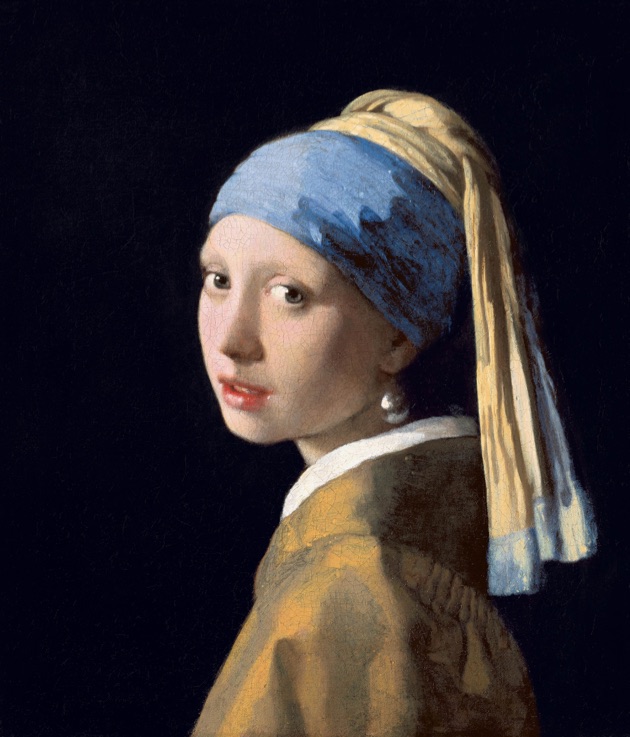
he same can be said for this masterpiece by Jan Vermeer. The face of the girl, as well as her pearl earring, seem to have been painted with pure light. Optical accuracy has been achieved in a supreme degree here. But the vivid quality of this unforgettable image owes its impact to far more than this. The qualities that breathe life into an image to make it tangibly real for the viewer are not so much technical as artistic and abstract. Unlike traditional art, realistic art carefully hides these qualities, so that the average viewer is not even aware of them.
The hidden qualities of realistic art
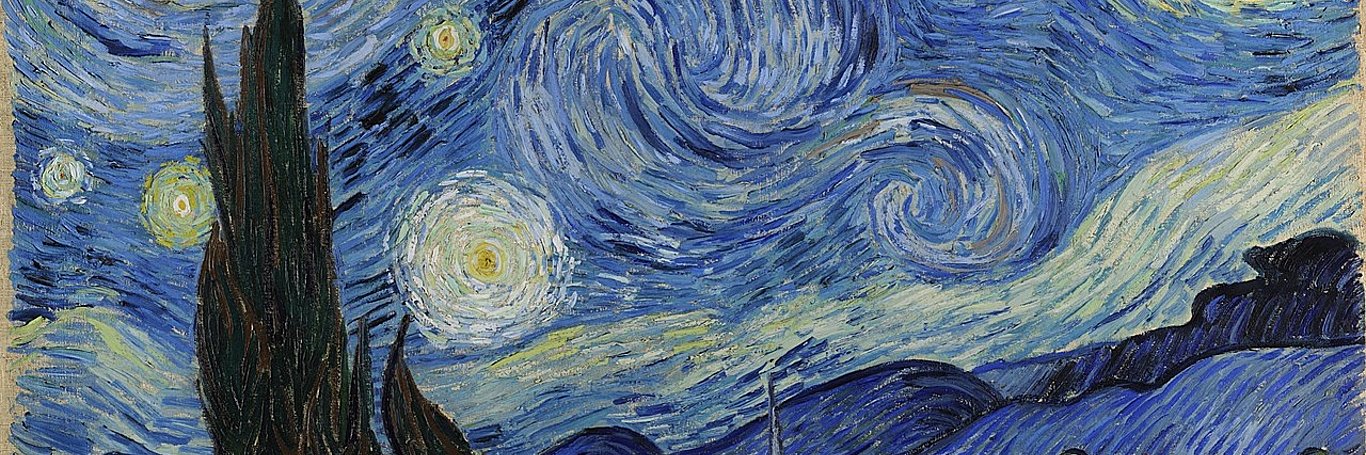
The expression of emotion in a realistic scene poses some difficult problems. In the art of traditional societies, the expression of emotion and mood is facilitated by the expressive distortion of form that is inherent in the abstract qualities of the style. This abstraction can also express a particular attitude to the world. Modern art, starting with Post-Impressionism, recaptured these qualities, as this painting by Vincent van Gogh shows.
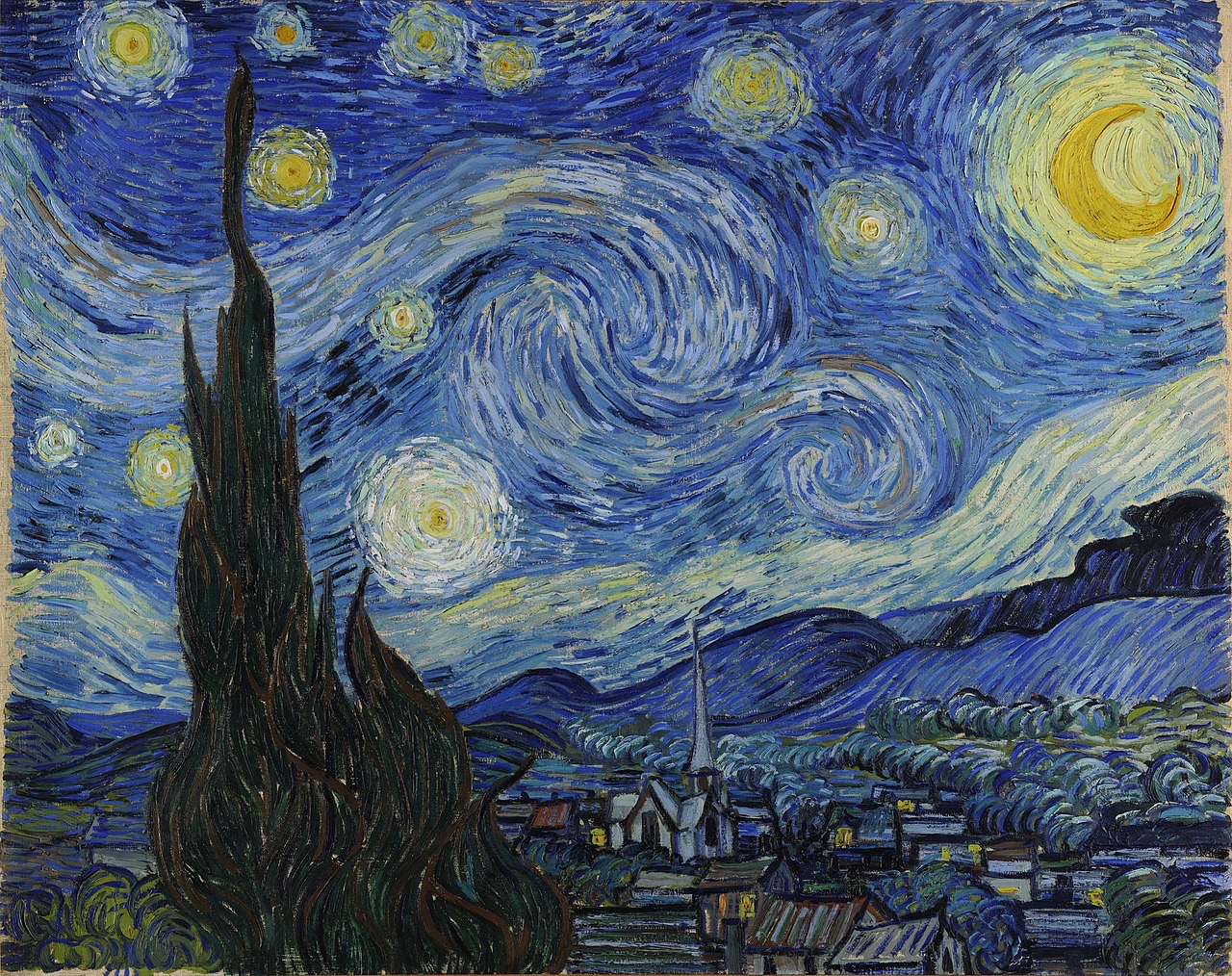
This painting is quite unlike any photograph of a starry night, but it conveys the vision and emotion of the artist in a way that is artistically more direct than what a photograph or realistic painting could. Imagine this scene without the distortion or abstraction of form, the exaggerated use of colour or the powerful use of brushwork. These are totally abstract devices that have nothing to do with photographic reality. A somewhat abstracted use of colour is one of the most effective ways of imbuing a realistic image with mood or emotion, and it has been employed by painters since the Renaissance. Exaggerated or obvious brushwork was likewise employed since the Renaissance by some artists, although very subtly for the most part.
You must be logged in to post a comment. Login here.
About this article
An unusual challenge
visibility3
favorite_border0
mode_comment0